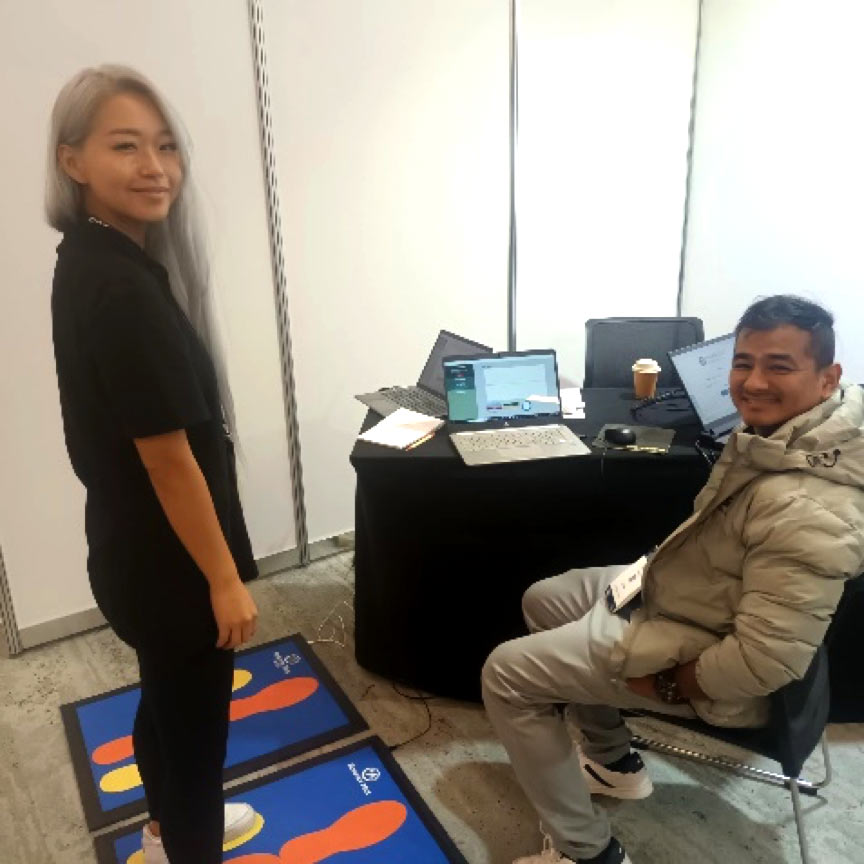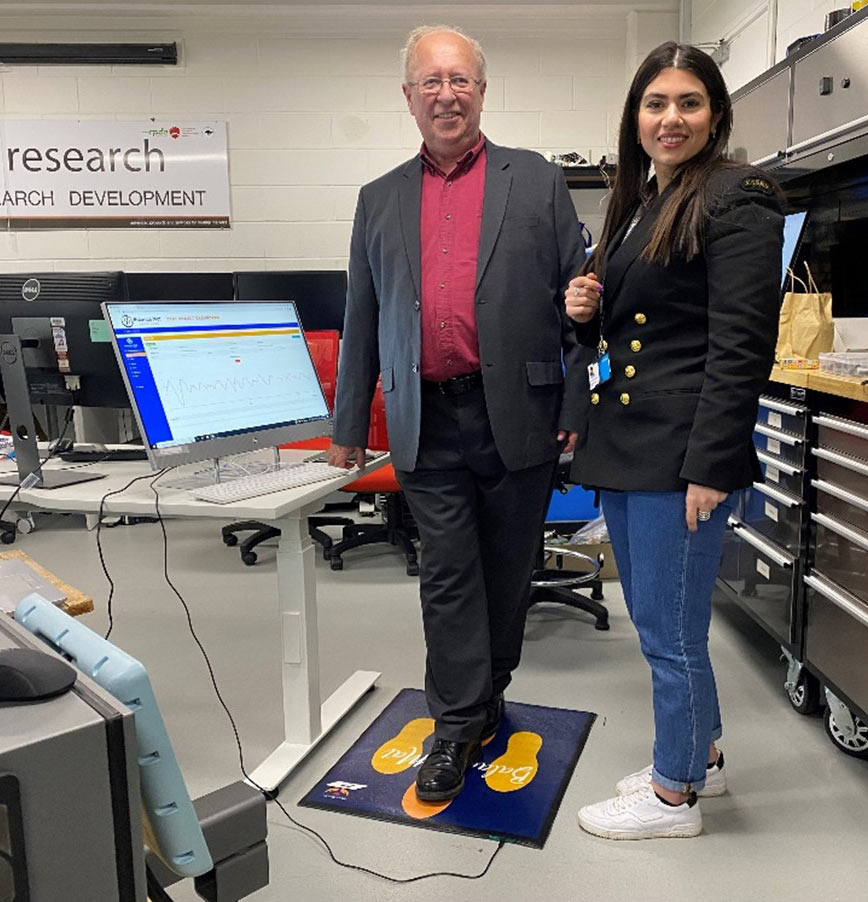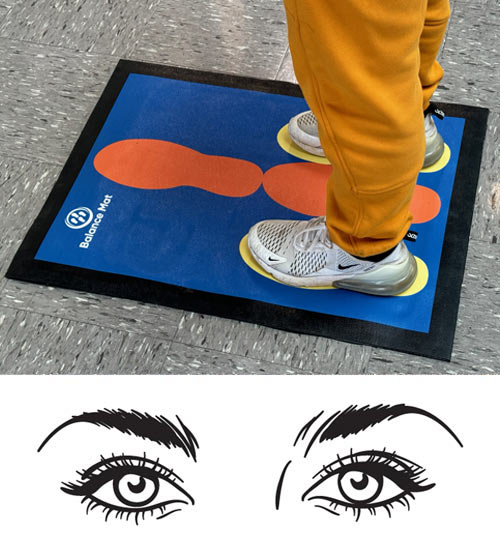
Test 1. Normal stance - eyes open
The normal stance test measures the balance of a person standing still on the mat with their feet shoulder width apart as shown in the photograph above. A score of zero indicates zero postural sway and implies the person has excellent balance. Higher scores indicate poorer balance.
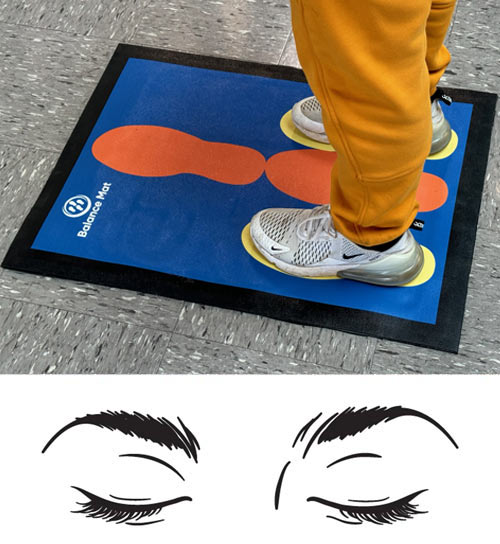
Test 2. Normal stance eyes closed
Test 2 is the same as Test 1 but with the person’s eyes closed. This extra functionality has been developed specifically for researchers and vestibular practitioners interested in assessing neurological conditions or the nexus between balance and certain medical conditions like Parkinson’s disease and diabetes.
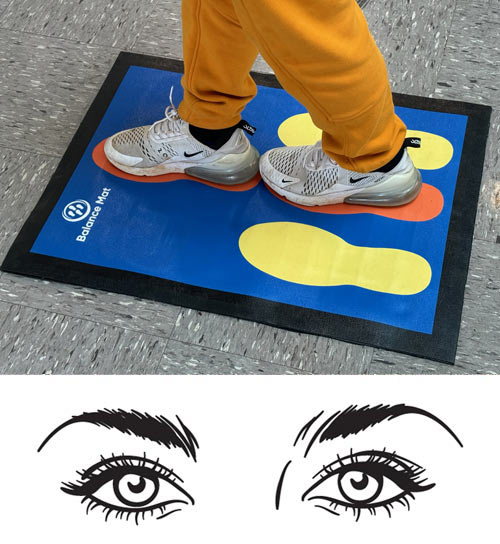
Test 3. Tandem stance eyes open
The tandem stance test involves the person standing with one foot in front of the other, heel to toe. It tests lateral postural stability by narrowing the base of support and gives valuable information about the person’s sense of positioning, or proprioception, and motor coordination.
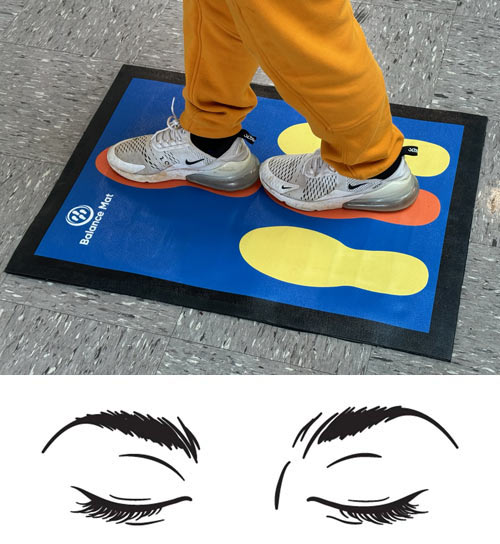
Test 4. Tandem stance eyes closed
Test 4 is a repeat of Test 3, only with the person’s eyes closed. As with Test 2, the extra eyes-closed functionality can be used by balance, falls risk and neurological researchers and vestibular practitioners to see how well the brain and body are working together.
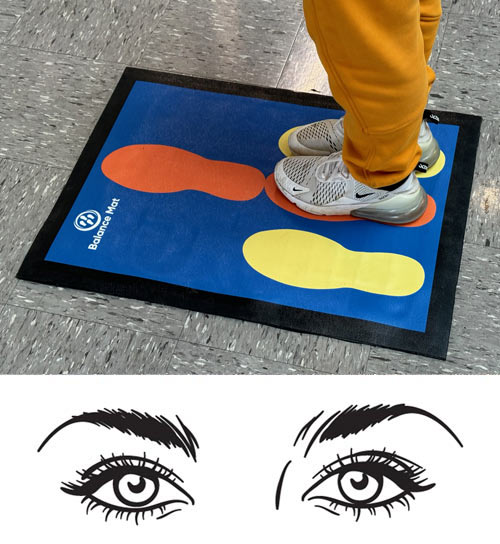
Test 5. Feet together - eyes open
Often required by vestibular practitioners, the feet together stance reduces the base of support and makes it more challenging to stay balanced. Like the tandem stance, this standing position gives vestibular practitioners more information about how well the brain and body are communicating with each other.
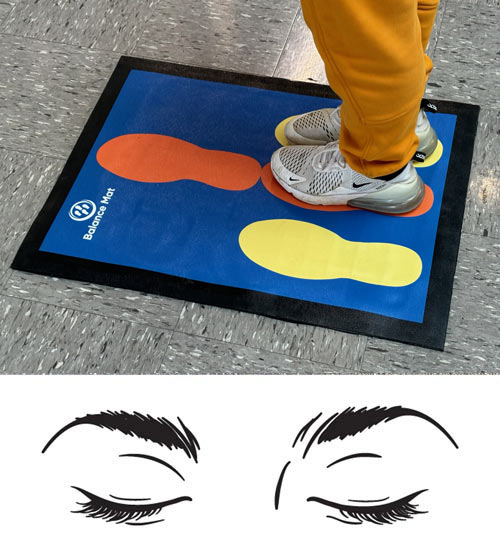
Test 6. Feet together - eyes closed
Test 6 is a repeat of Test 5, only with the person’s eyes closed. As with Test 2, the extra eyes-closed functionality can be used by balance, falls risk and neurological researchers and vestibular practitioners to see how well the brain and body are working together.
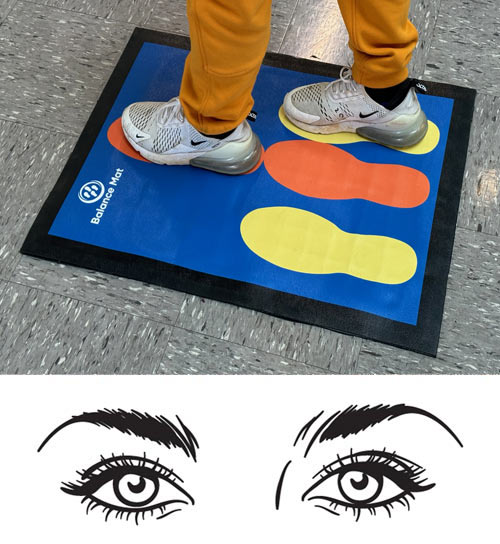
Test 7. Semi tandem - eyes open
The semi tandem test is for those who cannot manage the tandem stance since it is an easier test to perform. It gives the practitioner and researcher information about the person’s balance with their lateral stability removed.
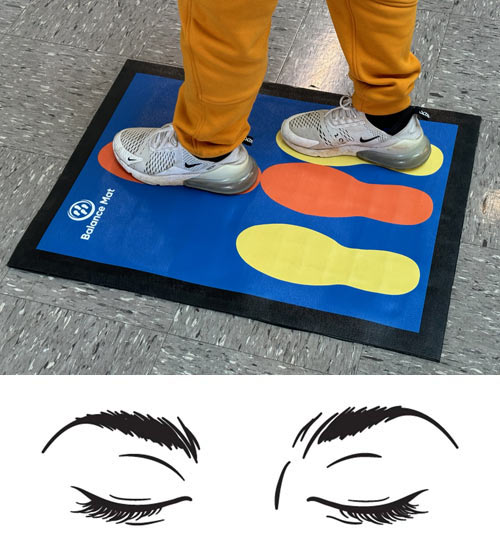
Test 8. Semi tandem - eyes closed
Test 8 is a repeat of Test 7, only with the person’s eyes closed. As with the other eyes-closed tests, this test provides more nuanced information about how well the person’s brain and body are working together.
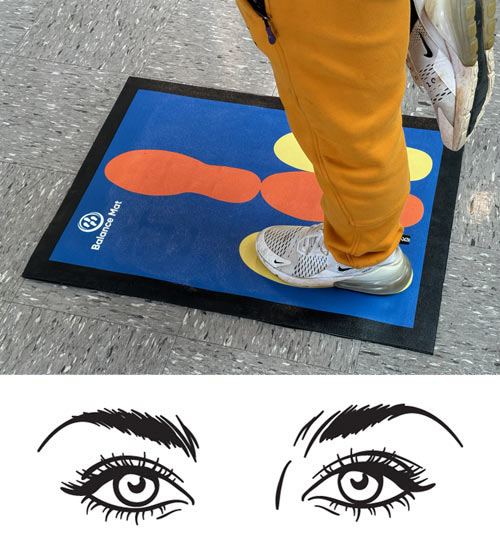
Test 9. One legged – left foot - eyes open
Sometimes called the Stork or Flamingo, Test 9 requires the person to stand on their left foot on the left footprint. The ability to measure static balance on each leg independently and compare the results is an important means of identifying balance asymmetry.
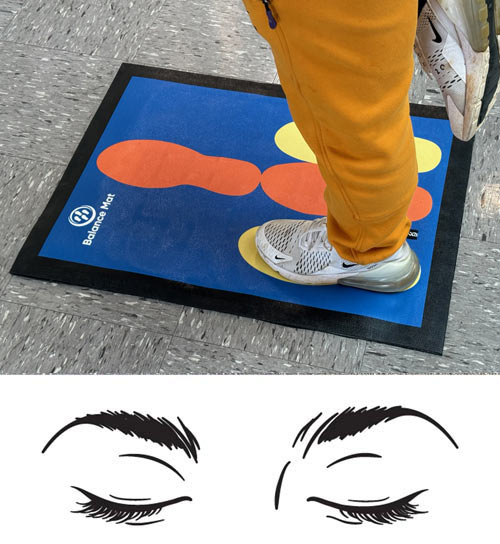
Test 10. One legged – left foot - eyes closed
Test 10 is a repeat of Test 9, only with the person’s eyes closed. As with Test 2, the extra eyes-closed functionality can be used by balance, falls risk and neurological researchers and vestibular practitioners to see how well the brain and body are working together.
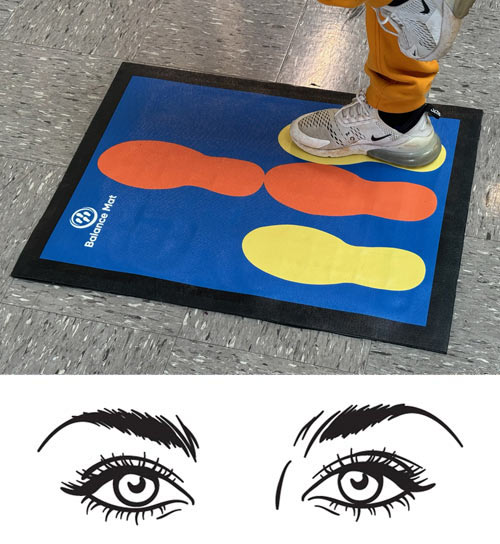
Test 11. One legged – right foot - eyes open
Test 11 requires the person to stand on their right foot on the right footprint. The ability to measure static balance on each leg independently and compare the results is an important means of identifying balance asymmetry.
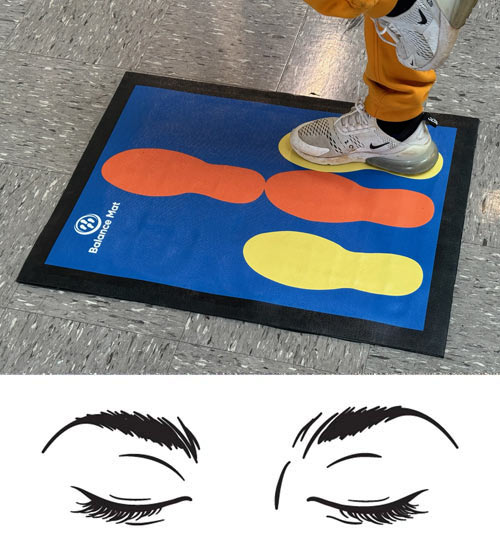
Test 12. One legged – right foot - eyes closed
Test 12 is a repeat of Test 11, only with the person’s eyes closed. As with the other tests, the extra eyes-closed functionality can be used by researchers and practitioners to see how well the brain and body are working together.